Rapid Test Kit - Avian Influenza Antigen Test Kit, AIV Ag Test
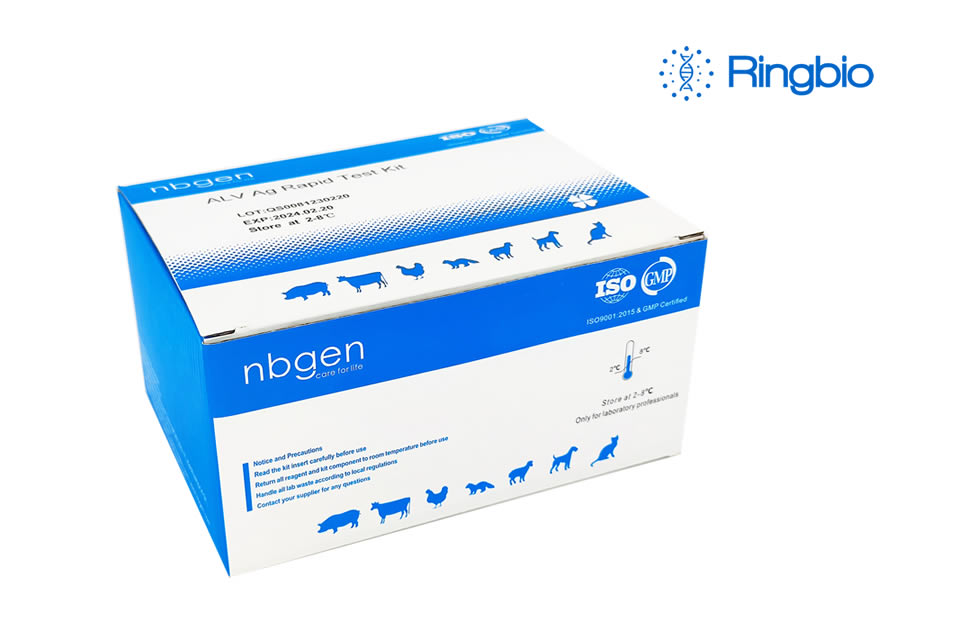
Avian influenza refers to the disease caused by infection with avian (bird) influenza (flu) Type A viruses. These viruses occur naturally among wild aquatic birds worldwide and can infect domestic poultry and other bird and animal species. Avian influenza A viruses are classified into the following two categories: low pathogenic avian influenza (LPAI) A viruses, and highly pathogenic avian influenza (HPAI) A viruses. H5 and H7 are the most known HPAI viruses.
Key facts of Avian influenza antigen test kit
Ready to use kits for vet professionals
No special instrument required
Only less than 20min to get visual result
Low cost with high sensitivity
Technical details of this Avian influenza antigen test kit
Product name Avian influenza antigen test kit
Product code T21195
Principle Sandwich Immunoassay
Species Avian, poultry
Samples throat swabs
Sample Preparation Swabs are extracted with sample buffer
Specificity 100% compared with HI/HA
Sensitivity 100% compared with HI/HA
Package Size 25T, 50T
Format Rapid Antigen Test Kit
Shelf-life 12 months
Storage 2-30 oC in cool dark plate
Approval This kit has been approved by China Ministry of Agriculture
Performance of the Avian influenza antigen test kit
The kit was validated against ELISA, HI/HA experiment, which demonstrated great accuracy and precision.
The sensitivity is over 95% and the specificity is over 95%.
Positive samples can be submitted to an approved reference laboratory for confirmation and subtype determination.
Avian influenza antigen test kit components
Test Cassette, 25 pcs
Sample buffer, 25 pcs
Disposable swab, 25 pcs
Disposable pipette, 25 pcs
Disposable PE gloves, 3 pairs
Kit instruction
H5N1, for example, a highly pathogenic AI virus, was initially diagnosed in humans in Hong Kong in 1997. The virus then re-emerged in 2003 and 2004, and spread from Asia to Europe and Africa causing several hundred human cases and deaths, as well as destruction of hundreds of millions of poultry. This Asiatic form of H5N1 triggered concern from scientists and authorities and remains under close surveillance due to its feared pandemic potential if a mutation allows it to be transmitted from human to human.
Nowadays, due to ongoing circulation of various strains (H5N1, H5N2, H5N8, H7N8, etc), outbreaks of avian influenza continue to be a global public health concern. The OIE’s objectives of promoting transparency and understanding of the global animal disease situation continue as a priority of our organisation in the face of this situation, in order to protect public health, and to ensure the safety of world trade in animals and animal products.

 Phone +6221 84310643
 Email sales@diagindo.co.id